public_sonata_ai_landing
GPU and Heterogeneous Execution Evidence
Document: 05 of 10
Status: Public Evidence (L3)
Source reference: Capability Map 2026-06-02, TinyStories BPE live run 2026-06-18
Environment
GPU execution was validated on a system with an NVIDIA GeForce RTX 2070 Super (8 GB VRAM, compute capability 7.5 / Turing). The GPU backend is implemented through a dynamically-loaded CUDA C++ shared library that interfaces with the main runtime via a Foreign Function Interface (FFI).
CUDA initialization
CUDA initialization succeeded with correct device identification, driver version compatibility, and memory query. The runtime dynamically detects GPU availability and selects the execution backend accordingly.
GPU memory tests
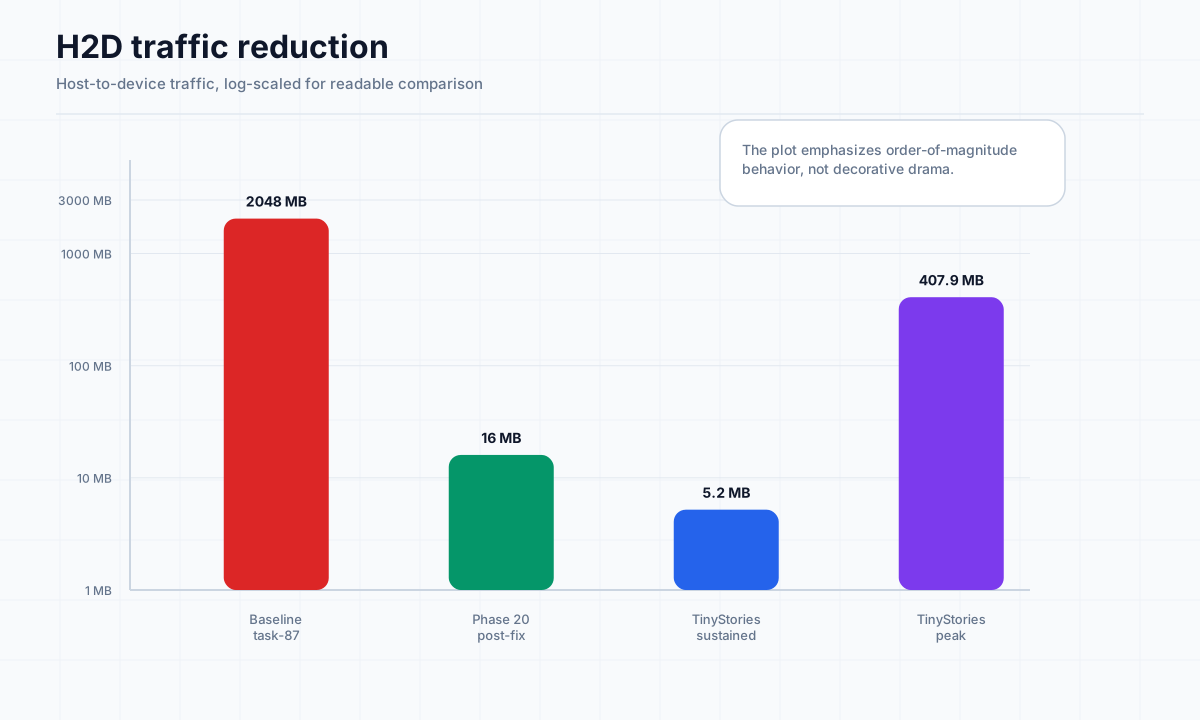
GPU memory allocation, deallocation, and host-to-device / device-to-host transfer operations passed validation. Memory pressure handling was tested with emergency allocator guard behavior confirmed at the VRAM ceiling boundary.
MatMul evidence
Matrix multiplication on GPU was validated against CPU reference results:
| Configuration | CPU (multithreaded) | GPU (CUDA) |
|---|---|---|
| 256x256x256 | 63 ms | 9 ms |
GPU MatMul uses cuBLAS-backed execution with support for FP32, FP16 (Tensor Cores), and INT8 (Tensor Cores with cuBLAS INT8 GEMM) precision paths.
Conv2D evidence
2D convolution was validated:
| Configuration | CPU (multithreaded) | GPU (CUDA kernel) |
|---|---|---|
| 4x8x16x16 | 33 ms | 1 ms |
The convolution operation uses a custom CUDA kernel with dynamic batch and channel processing.
Fallback behavior
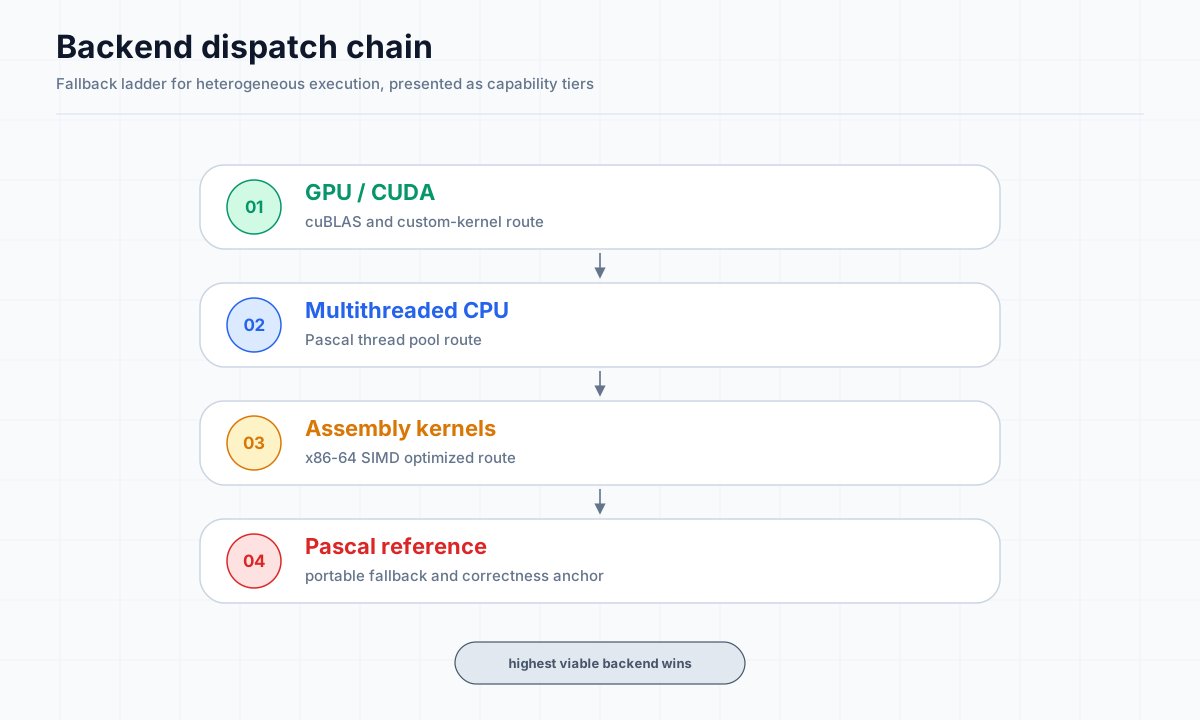
The hardware abstraction layer implements a multi-level dispatch chain:
GPU (CUDA) → Multithreaded CPU → Assembly SIMD → Pascal Reference
If the GPU driver is unavailable, a specific operation is unsupported, or memory pressure requires fallback, execution moves down the chain automatically. Fallback behavior was validated with zero execution errors or memory leaks during transition tests.
Current limitations
- GPU backend requires NVIDIA hardware with CUDA support
- AMD GPU support uses an experimental Vulkan backend that is not yet validated at the same level
- Small matrix sizes (< 256) do not benefit from Tensor Cores
- The FP16 backward path is partially integrated; gradient accumulation remains FP32 for some operations
- No multi-GPU support